skip to main |
skip to sidebar
Forth-five miles of rustic carriage roads, the gift of John D. Rockefeller, weave around the mountains and valleys of Acadia National Park.
They are true roads, constructed with methods that required much hand labor.
Rockefeller wanted to travel on motor-free byways via horse and carriage into the heart of the island.
His construction efforts from 1913 to 1940 resulted in roads with sweeping vistas and close-up views of the landscape.
These roads are the best example of broken-stone roads—a type of road commonly used at the turn of the century—in America today.
Cedar signposts were installed at intersections to direct carriage drivers. Today, numbers that match guidebooks are attached to the posts and help hikers, bikers,skiers and carriage drivers find their way.
Rockefeller financed 16 of the 17 stone-faced bridges to span streams, waterfalls, roads and cliffsides.
They are steel-reinforced concrete, but the use of native stone for the facing gives them a natural appearance.
Two impressive gate lodges were also built as entrances to the system.
We unloaded our camper in the campground so we could pass under these bridges, some as low as 10 feet. Just another reason we like our camper so much.
Acadia National Park was established in 1919 and has about 47,000 acres today. Private individuals have donated all of the land, more than 11,000 acres by John D. Rockefeller.
This is the first National Park established east of the Mississippi.
The Bass Harbor lighthouse is found on the western side of the park.
We are standing on Cadillac Summit, at 1530 feet, the highest point on the east coast between Maine and Brazil.
The views on a clear day are very peaceful.
There are several hundred miles of hiking trails on the island.
We listened to a ranger explain the animal and plant life of a tide pool and the working of a lobster trap.
Much of the island is composed of granite, peppered with black hornblende, quartz crystals and pink feldspar to give its pink hue.
There are the usual spring flowers.
Rhododendron
Bunch Berries
Drooping Trillium
Thunder Hole is known for it’s huge ocean spray and loud booming thunder sound on the incoming 3/4 tide.
This is the spot on Cadillac Mountain where one can be the first in the nation to witness the sunrise and start a new day.
The town of Bar Harbor and Frenchman Bay lie far below.
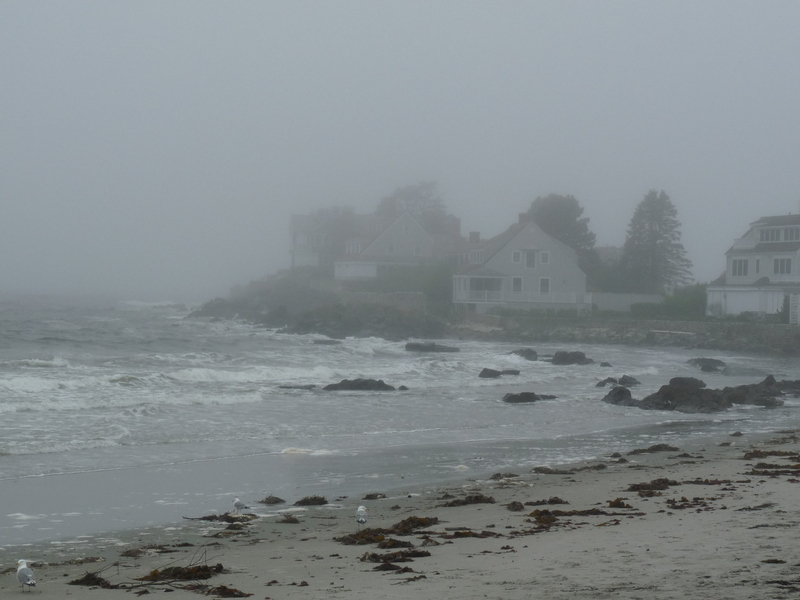
We got our first look at the Maine coast this morning--
-- a typically windy, fog-shrouded day.
Just right for these Common Eiders.
As the day wore on the skies began to clear--
--and by early afternoon we had a lovely lunch with this view right out our back door.
Our destination today is Acadia National Park on Mount Desert Island, the third largest island in the continental United States, and we arrive in time--
--to be the first visitors of the year in Seawall Campground on the west side or “quiet side” of the park.
We enjoyed seven days here over Memorial Day weekend and explored the park away from most of the crowd which normally stays around Bar Harbor and the tourist attractions on the west side.
Traveling on highway 1 North of Kittery, Maine, we got our first view of the Atlantic coast--
--and saw Common Eider ducks for the first time in our travels.
Today’s destination was L.L. Bean in Freeport, Maine. There are several very nice stores with all the items we expected to find. However, we found Freeport itself to be just another high-end shopping village. Overall, we were somewhat disappointed.
With time now on our hands, we had a nice leisurely lunch overlooking this quiet harbor.
The view right out the back door.
Tracing our way back to Portland, our next destination was the DeLorme headquarters in Yarmouth, Maine.
This is not the kind of place that Judy will pass up.
Their map store was understandably impressive.
Maps and travel books from all over the world were for sale.
The DeLorme globe is the world’s largest revolving and rotating globe. It is the largest printed image of the Earth ever created.
To find more about Eartha go to www.DeLorme.com.
There is a wonderful display of geocoins.
To find more information about this interesting hobby go to www.Geocaching.com.
We have had a lot of fun with this and have been to interesting places that we otherwise would never have found. It is also a great family hobby.
You can’t miss this building when you pass it at night.